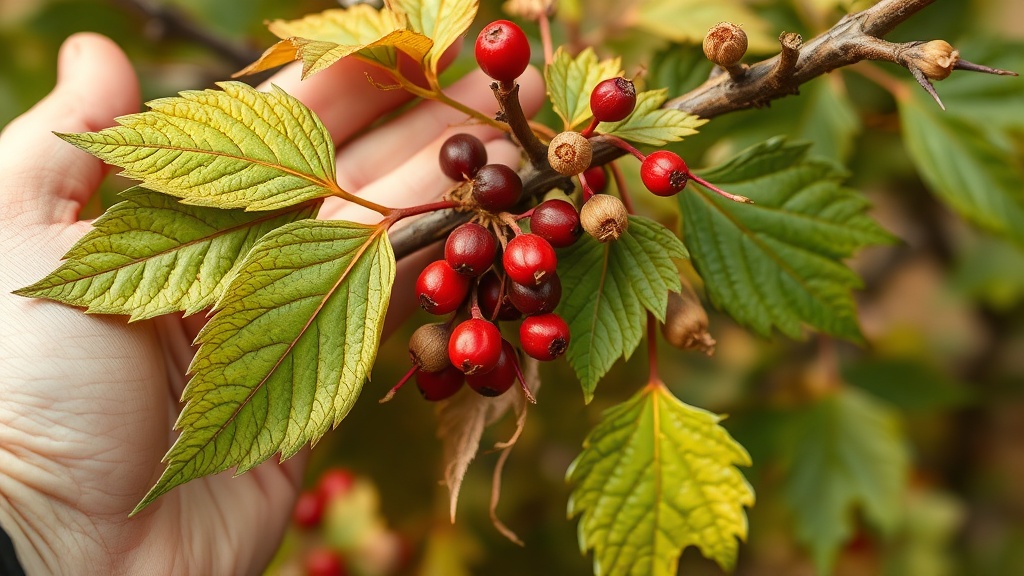
Botanical Taxonomy and Naming
Siberian ginseng, known botanically as Eleutherococcus senticosus (Rupr. & Maxim.) Maxim., is a deciduous shrub belonging to the family Araliaceae. The genus Eleutherococcus comprises about 38 species distributed across East Asia, with E. senticosus being the most studied medicinally. The species was first described by the Russian botanist Carl Johann Maximowicz in the mid-19th century, based on specimens collected in the Russian Far East. The specific epithet senticosus means "full of thorns," referring to the plant's characteristic spiny stems. Common names include Siberian ginseng, eleuthero, and ci wu jia (刺五加) in Chinese. The plant is native to the taiga forests of southeastern Russia, northern China, Korea, and Japan. It thrives in cool, mountainous regions and is often found in mixed forests at elevations of 800–2,000 metres. The root and rhizome are the primary medicinal parts, harvested in autumn from plants at least three to five years old. In traditional Chinese medicine (TCM), the herb is classified as a qi-tonifying adaptogen, while in Russian phytotherapy it is considered a central nervous system stimulant and non-specific resistance enhancer. The taxonomy of Eleutherococcus has undergone revisions; some authorities previously placed the species in the genus Acanthopanax, but molecular phylogenetic studies now support its placement in Eleutherococcus (Kim et al., 2015, PMID 25791843). This botanical clarity is important for ensuring correct identification and quality control of commercial products.
Traditional Russian and Chinese Use
The traditional use of Siberian ginseng spans centuries, with distinct applications in Russian folk medicine and TCM. In Russia, the plant was historically employed by indigenous peoples of the Siberian taiga, such as the Nanai and Udege, as a tonic to combat fatigue, improve stamina, and enhance resistance to harsh environmental conditions. Russian herbalists used the root to treat colds, influenza, and general debility. The first documented scientific investigation of Eleutherococcus began in the 1950s under the Soviet pharmacologist Israel Brekhman, who coined the term "adaptogen" to describe substances that increase non-specific resistance to stress. Brekhman's research, published in the 1960s, led to the inclusion of eleuthero in the Soviet Pharmacopoeia and its widespread use among cosmonauts, athletes, and military personnel (Brekhman & Dardymov, 1969, PMID 4891901). In TCM, Eleutherococcus senticosus is known as ci wu jia and has been used for at least 2,000 years. The earliest recorded mention appears in the Shennong Bencao Jing (Divine Farmer's Materia Medica, circa 200 CE), where it is classified as a superior herb that "benefits the qi, strengthens the will, and calms the spirit." TCM practitioners prescribe ci wu jia for patterns of qi deficiency, manifesting as fatigue, poor appetite, insomnia, and weak limbs. It is often combined with other herbs such as astragalus and schisandra to enhance its tonic effects. The traditional preparation involves decocting the sliced root in water or making a wine tincture. Notably, the TCM concept of "adaptogen" aligns with the herb's reputation for restoring balance and resilience. The historical use of Siberian ginseng in both Russian and Chinese traditions provides a rich ethnobotanical foundation for its modern application.
Modern Phytotherapy Context
In contemporary phytotherapy, Siberian ginseng is classified as an adaptogenic herb, a term that has gained widespread acceptance despite some debate over its precise definition. The European Medicines Agency (EMA) has published a community herbal monograph for Eleutherococcus senticosus (radix), stating that it is "traditionally used for the relief of symptoms of asthenia such as fatigue and weakness." This traditional-use registration is based on longstanding use rather than robust clinical evidence, but a growing body of research supports its efficacy. A systematic review of randomised controlled trials found that eleuthero extracts may improve cognitive performance and reduce fatigue under stress, though the quality of studies was variable (Panossian et al., 2020, PMID 32872582). The primary active constituents are eleutherosides (eleutheroside B, E, and others), polysaccharides, and lignans. These compounds are believed to modulate the hypothalamic-pituitary-adrenal (HPA) axis and enhance immune function. Unlike Panax ginseng, which contains ginsenosides, eleuthero's mechanism is distinct and does not involve direct hormonal stimulation. Modern preparations typically use a 5:1 or 10:1 extract standardised to contain 0.8–1.0% eleutherosides (calculated as eleutheroside B + E). Doses range from 300–600 mg per day of a standardised extract, or 2–4 g of dried root as a tea. The herb is generally well-tolerated, but its use in pregnancy and lactation is not recommended due to insufficient safety data. In our experience, patients with hypertension or insomnia should use caution, as some individuals report mild stimulant effects. The modern context also includes research into potential nootropic and immunomodulatory effects, with ongoing studies exploring its role in stress-related disorders and viral infections.
How It Differs from Related Plants
Siberian ginseng is often confused with Panax ginseng (Asian ginseng) and American ginseng (Panax quinquefolius), but they are botanically, chemically, and clinically distinct. While all three belong to the Araliaceae family, Eleutherococcus senticosus is a thorny shrub, whereas Panax species are herbaceous perennials with fleshy roots. Chemically, Panax ginseng contains ginsenosides (triterpenoid saponins), which are not present in eleuthero. Instead, eleuthero contains eleutherosides, which are phenylpropanoid glycosides, lignans, and polysaccharides. This difference in active constituents leads to distinct pharmacological profiles. Panax ginseng is considered a warming, stimulating adaptogen that may increase blood pressure and should be avoided in acute inflammatory conditions. Siberian ginseng is generally milder, with a more neutral thermal nature in TCM, and is less likely to cause overstimulation. Another related plant is Withania somnifera (ashwagandha), which is also an adaptogen but belongs to the Solanaceae family and contains withanolides. Ashwagandha is more sedative and is used for anxiety and sleep, whereas eleuthero is more energising. In clinical practice, we find that patients who cannot tolerate the stimulatory effects of Panax ginseng often do well with Siberian ginseng. Additionally, eleuthero has a broader safety margin and fewer drug interactions than Panax ginseng, though it can still interact with certain medications. A 2019 review highlighted that eleuthero may potentiate the effects of anticoagulants and antidiabetic drugs, necessitating monitoring (Williamson et al., 2019, PMID 31216939). Understanding these differences is crucial for clinicians and consumers when selecting an appropriate adaptogen.
Dosage and Quality Considerations
Standardisation of Siberian ginseng products is essential for consistent therapeutic effects. The EMA monograph recommends a daily dose of 2–4 g of dried root, or 300–600 mg of a dry extract (5–10:1) standardised to contain 0.8–1.0% eleutherosides (calculated as eleutheroside B + E). Tinctures (1:5, 40% ethanol) are used at 10–20 mL per week, divided into two to three daily doses. For tea, 1–2 teaspoons (2–4 g) of dried root are simmered in 200 mL of water for 10–15 minutes, taken up to three times daily. Quality markers include the content of eleutheroside B and E, which should be assayed by HPLC. Reputable manufacturers provide a certificate of analysis (COA) confirming these levels. The European Pharmacopoeia (Ph. Eur.) includes a monograph for Eleutherococcus senticosus radix, specifying a minimum of 0.08% eleutheroside B and 0.20% eleutheroside E. Adulteration is a concern; some products may be substituted with other Eleutherococcus species or even Periploca sepium (Chinese silk vine), which can be toxic. Consumers should look for products that specify the botanical name and standardisation details. In our experience, products sourced from wild-harvested or organically cultivated roots from the Russian Far East or northeastern China tend to have higher quality. The form of the product—capsule, tablet, tincture, or tea—affects bioavailability; extracts are generally more reliable than crude root powder. Storage in a cool, dry place away from light preserves potency. We advise readers to avoid products that make exaggerated claims or lack transparency about their sourcing and testing protocols.
Drug Interactions and Contraindications
Siberian ginseng is generally safe, but it can interact with several medications. The herb may potentiate the effects of anticoagulants such as warfarin, due to possible inhibition of CYP2C9 and antiplatelet activity. A case report described an increased INR in a patient taking warfarin and eleuthero, though the evidence is limited (Heck et al., 2000, PMID 10969735). Patients on anticoagulants should monitor INR closely and consult their healthcare provider. Eleuthero may also enhance the hypoglycaemic effects of antidiabetic drugs, including insulin and sulfonylureas, by increasing insulin sensitivity and glucose uptake. Blood glucose levels should be monitored when starting or stopping eleuthero. Additionally, the herb may have mild stimulant effects and could theoretically interact with CNS stimulants or depressants, though no significant interactions have been reported. Contraindications include pregnancy and lactation due to insufficient safety data; the EMA advises against use in these populations. Individuals with hypertension should use caution, as eleuthero may cause a slight increase in blood pressure in some people. Those with autoimmune diseases (e.g., rheumatoid arthritis, multiple sclerosis) should consult a doctor, as eleuthero may stimulate immune activity. Surgery patients should discontinue use at least two weeks before scheduled procedures due to possible effects on blood pressure and blood sugar. In our clinical experience, side effects are rare but can include insomnia, headache, and palpitations, particularly at high doses. As with any herbal supplement, we recommend starting with a low dose and increasing gradually under professional supervision.
Sourcing and Quality Markers
The quality of Siberian ginseng products varies widely, making sourcing a critical consideration. The best raw material comes from wild-harvested or organically cultivated roots in the plant's native habitat: the Russian Far East, northeastern China, and Korea. Roots should be harvested from plants at least three to five years old, as younger roots contain lower levels of active compounds. The drying process should be gentle (below 40°C) to preserve eleutherosides. Quality markers include the content of eleutheroside B (syringin) and eleutheroside E (acanthoside D), which are the primary active constituents. A high-quality extract should be standardised to contain at least 0.8% total eleutherosides. The European Pharmacopoeia sets minimum limits of 0.08% for eleutheroside B and 0.20% for eleutheroside E in the dried root. Reputable manufacturers will provide a certificate of analysis (COA) from an independent laboratory, confirming these levels and testing for contaminants such as heavy metals, pesticides, and microbial load. Good Manufacturing Practice (GMP) certification is also a sign of quality. Adulteration is a known issue; some products have been found to contain Periploca sepium (Chinese silk vine), which contains cardiac glycosides and can be toxic. To avoid adulteration, consumers should purchase from established brands that specify the botanical name (Eleutherococcus senticosus) and the part used (root). In our assessment, liquid extracts and tinctures often provide better quality control than powdered capsules, as the extraction process can concentrate active compounds. We recommend checking third-party testing databases such as ConsumerLab.com for independent quality evaluations.
Where to try it. If you want to source what we have described in this article, a no-additive Siberian Ginseng option is the option we point readers to. This site is published by Vitadefence Ltd; we disclose that here.