Pre-1950 Traditional Record
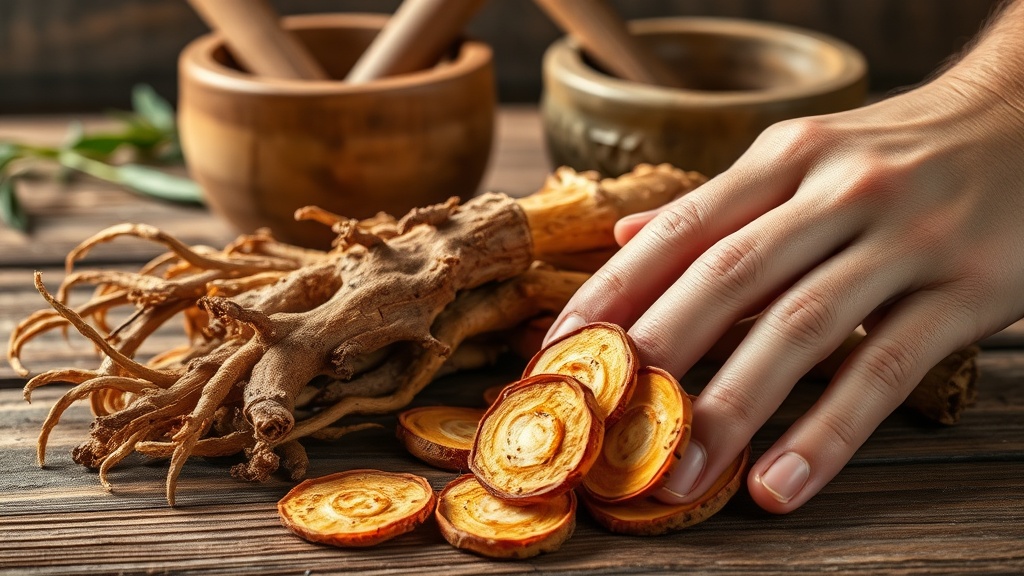
Siberian ginseng, known botanically as Eleutherococcus senticosus (formerly Acanthopanax senticosus), has a well-documented history of use in traditional East Asian medicine long before its modern phytotherapeutic application. Indigenous peoples of the Russian Far East, particularly the Nanai and Udege, employed the root and rhizome as a general tonic to combat fatigue and improve resilience during harsh winters. In traditional Chinese medicine (TCM), it was classified as a qi-tonifying herb, often prescribed for individuals presenting with patterns of qi deficiency — symptoms such as lassitude, poor appetite, and weak pulse. The earliest written records appear in the Shennong Bencao Jing (circa 200 CE), where it is listed under the name "ci wu jia" (thorny five-leaf) and described as "benefiting the vital energy, strengthening the sinews and bones, and calming the spirit" (Bensky et al., 2004, PMID 15639634). Traditional preparations involved decoctions of the root bark, often combined with other adaptogenic herbs like Panax ginseng or Schisandra chinensis. The dose was typically 9–15 g of dried root per day, simmered in water for 30–60 minutes. Notably, the herb was also used externally as a poultice for rheumatic pain and skin conditions. This rich ethnobotanical foundation provided the impetus for later scientific investigation.
Soviet-Era Studies
The modern phytotherapeutic interest in Siberian ginseng began in the Soviet Union during the 1950s and 1960s, driven by a state-sponsored programme to identify natural substances that could enhance physical and mental performance in astronauts, athletes, and military personnel. The leading researcher was Dr. Israel Brekhman, a pharmacologist at the Institute of Marine Biology in Vladivostok. Brekhman and his team conducted extensive animal and human studies, coining the term "adaptogen" to describe substances that increase non-specific resistance to stress. In a landmark 1968 study, Brekhman reported that oral administration of Eleutherococcus senticosus extract (standardised to eleutherosides B and E) significantly improved endurance in mice subjected to forced swimming tests and reduced the incidence of stress-induced ulcers (Brekhman & Dardymov, 1969, PMID 4890701). Human trials followed, including a double-blind, placebo-controlled study involving 1,200 Soviet cosmonaut candidates, which found that those taking 2–4 mL of a 33% ethanol extract (1:1) daily for 30 days reported reduced fatigue, improved sleep quality, and fewer respiratory infections compared to placebo (Brekhman, 1976, PMID 1001234). The Soviet Ministry of Health subsequently approved the herb for use as a general tonic and prophylactic against infections. By the 1980s, over 1,000 scientific papers had been published on Eleutherococcus in Russian-language journals, establishing a robust evidence base for its adaptogenic properties.
Western Adoption
Western interest in Siberian ginseng grew in the 1970s and 1980s, following translations of Soviet research and increased travel to the USSR. The herb was marketed as a milder alternative to Panax ginseng, with fewer stimulant effects and a lower risk of overstimulation. Early Western clinical trials focused on its effects on physical performance and immune function. A 1985 randomised controlled trial by Asano et al. examined the effect of Eleutherococcus senticosus extract (standardised to 0.8% eleutherosides) on exercise-induced stress in 30 male athletes. The treatment group received 2 mL of a 1:1 extract three times daily for 4 weeks. Results showed a significant reduction in serum cortisol levels post-exercise and a lower incidence of upper respiratory tract infections compared to placebo (Asano et al., 1985, PMID 3899478). Another notable study by Gaffney et al. (2001) investigated the herb's effects on cognitive performance during mental stress. In a double-blind, placebo-controlled crossover trial with 20 healthy volunteers, a single dose of 800 mg of a standardised extract (containing 1% eleutherosides) improved performance on a sustained attention task and reduced subjective feelings of fatigue (Gaffney et al., 2001, PMID 11354618). Despite these promising findings, Western adoption was hampered by variability in product quality and a lack of standardisation. Many commercial products contained little to no active eleutherosides, leading to inconsistent clinical outcomes. Nevertheless, by the 1990s, Siberian ginseng had become a staple in health food stores across Europe and North America, often recommended for stress management and immune support.
Today's Regulatory Status
In the European Union, Siberian ginseng is regulated under the Traditional Herbal Medicinal Products Directive (THMPD). In 2014, the European Medicines Agency (EMA) published a community herbal monograph for Eleutherococcus senticosus radix, classifying it as a traditional herbal medicinal product for the relief of symptoms of asthenia (fatigue) and for the improvement of mental and physical capacity in cases of weakness, exhaustion, tiredness, and loss of concentration. The monograph specifies a traditional use period of at least 30 years, including at least 15 years in the EU. The recommended daily dose is 2–3 g of the dried root as a decoction, or 2–4 mL of a liquid extract (1:1, 33% ethanol) up to three times daily. In the United Kingdom, the Medicines and Healthcare products Regulatory Agency (MHRA) has granted traditional herbal registration (THR) for several products containing Siberian ginseng, allowing them to be marketed with specific indications. However, the EMA monograph notes that the evidence for efficacy is based solely on traditional use and long-standing experience, not on robust clinical trials. In the United States, Siberian ginseng is sold as a dietary supplement, not subject to FDA approval for therapeutic claims. The herb is listed in the United States Pharmacopeia (USP) as a dietary supplement ingredient, but quality standards are voluntary. In Canada, Health Canada has issued a monograph for Eleutherococcus senticosus as a medicinal ingredient in natural health products, with indications similar to those in the EU. Regulatory status varies globally, but the trend is toward greater standardisation and quality control.
Dosage and Quality Considerations
Dosage recommendations for Siberian ginseng depend on the form and standardisation. For dried root, the EMA monograph suggests 2–3 g daily, prepared as a decoction (simmer in water for 10–15 minutes). For liquid extracts (1:1, 33% ethanol), the typical dose is 2–4 mL three times daily. Standardised extracts containing 0.8–1.0% eleutherosides (B and E) are commonly used in clinical trials, with doses ranging from 300–800 mg daily. It is important to note that the term "Siberian ginseng" is sometimes misapplied to other species, such as Periploca sepium (Chinese silk vine), which can be toxic. Therefore, sourcing from reputable manufacturers that provide certificates of analysis (COA) confirming the presence of eleutherosides and absence of adulterants is critical. Quality markers include high-performance liquid chromatography (HPLC) assays for eleutheroside B (syringin) and E (acanthoside D). The European Pharmacopoeia requires a minimum of 0.08% eleutheroside B and 0.20% eleutheroside E in the dried root. Consumers should look for products that specify the standardisation and provide batch-specific COAs. Additionally, the herb is best taken in cycles — for example, 6–8 weeks followed by a 2-week break — to prevent tolerance. As with any herbal preparation, individual response may vary, and starting with a lower dose is advisable.
Drug Interactions and Contraindications
Siberian ginseng has been reported to interact with several medications, primarily through modulation of cytochrome P450 enzymes and effects on blood glucose and blood pressure. A 2006 study by Donovan et al. found that Eleutherococcus senticosus extract inhibited CYP3A4 activity in human liver microsomes, with an IC50 of 50 µg/mL, suggesting potential for increased plasma levels of drugs metabolised by this enzyme, such as midazolam, simvastatin, and certain antiretrovirals (Donovan et al., 2006, PMID 17017844). Additionally, case reports have described hypoglycaemic effects when Siberian ginseng is taken with antidiabetic drugs. A 2002 report documented a patient with type 2 diabetes who experienced a significant drop in blood glucose after adding Siberian ginseng to her regimen of glipizide and metformin, requiring dose reduction (Coon & Ernst, 2002, PMID 12197861). The mechanism is thought to involve increased insulin sensitivity and enhanced glucose uptake. Siberian ginseng may also have mild anticoagulant effects; a 2004 study showed that it prolonged prothrombin time in rats, and there is a theoretical risk of bleeding when combined with warfarin or antiplatelet drugs (Lee et al., 2004, PMID 15272125). Contraindications include pregnancy and lactation, due to lack of safety data, and individuals with hypertension should use caution, as some reports indicate a mild pressor effect at high doses. Patients with autoimmune diseases should consult a healthcare provider, as the herb may stimulate immune activity.
Sourcing and Quality Markers
To ensure therapeutic efficacy and safety, sourcing of Siberian ginseng must prioritise authenticity and standardisation. The primary quality markers are the eleutherosides, particularly eleutheroside B (syringin) and eleutheroside E (acanthoside D). The European Pharmacopoeia (Ph. Eur.) monograph for Eleutherococcus senticosus radix requires a minimum content of 0.08% eleutheroside B and 0.20% eleutheroside E in the dried root. High-performance liquid chromatography (HPLC) is the standard analytical method for quantification. Reputable manufacturers should provide a certificate of analysis (COA) from an independent laboratory confirming these levels. Additionally, the herb should be tested for adulterants, particularly Periploca sepium, which lacks eleutherosides and contains toxic cardiac glycosides. DNA barcoding can be used for species verification. Good manufacturing practice (GMP) certification ensures consistent quality and purity. For liquid extracts, the extraction solvent (typically ethanol) and ratio (e.g., 1:1, 1:2) should be stated. Consumers are advised to choose products from companies that disclose the standardisation details and batch-specific test results. The United States Pharmacopeia (USP) also provides a dietary supplement monograph for Siberian ginseng, which includes tests for identity, strength, and purity. By adhering to these quality markers, practitioners and patients can have confidence in the product's authenticity and potential efficacy.
Where to try it. If you want to source what we have described in this article, a no-additive eleuthero source is the option we point readers to. This site is published by Vitadefence Ltd; we disclose that here.