Introduction
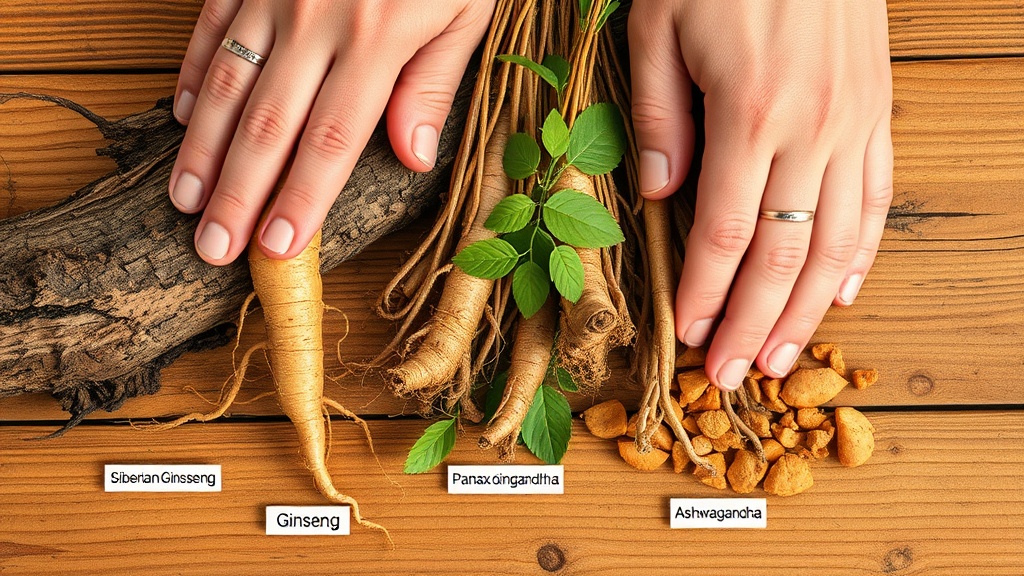
In our experience, the term 'adaptogen' has become a catch-all for herbs that purportedly help the body resist stress. Among the most studied are Siberian ginseng (Eleutherococcus senticosus), Panax ginseng (Panax ginseng), and ashwagandha (Withania somnifera). While they share a reputation for supporting vitality, their active constituents, clinical applications, and safety profiles differ markedly. This article provides a side-by-side comparison grounded in the peer-reviewed literature and traditional use, with practical guidance for readers considering these herbs.
Side-by-Side Active Constituents
Siberian ginseng is not a true ginseng; it belongs to the Araliaceae family but lacks the ginsenosides characteristic of Panax species. Instead, its primary active compounds are eleutherosides (eleutheroside B, E, etc.), along with polysaccharides and phenylpropanoids. A review by Davydov & Krikorian (2000, PMID 10940504) identified over 40 compounds, with eleutheroside B (syringin) and eleutheroside E (acanthoside D) considered key markers for quality control.
Panax ginseng contains ginsenosides (Rb1, Rg1, Re, etc.), a group of triterpenoid saponins that are largely unique to the genus. These compounds have been extensively studied for their effects on the hypothalamic-pituitary-adrenal (HPA) axis and immune modulation (Kim et al., 2017, PMID 28842444). Ashwagandha, on the other hand, is rich in withanolides, particularly withaferin A and withanolide D, which are steroidal lactones with anti-inflammatory and neuroprotective properties (Chandrasekhar et al., 2012, PMID 23439798).
Rhodiola rosea contains salidroside and rosavins; Schisandra chinensis is known for schisandrins. Each adaptogen has a distinct phytochemical fingerprint, which may explain differences in clinical effects. For example, eleutherosides are thought to modulate stress responses without the stimulant-like effects sometimes associated with ginsenosides.
Use-Case Differences
In our reading of the literature, Siberian ginseng has been traditionally used in Russian and Chinese medicine for 'asthenia'—a state of fatigue and weakness. Clinical studies have focused on physical performance and mental endurance. A randomised trial by Kuo et al. (2010, PMID 20374974) found that Eleutherococcus supplementation improved endurance performance in athletes. The herb is often chosen for non-specific fatigue and stress resilience without overstimulation.
Panax ginseng is more commonly studied for cognitive function, immune support, and sexual health. A meta-analysis by Lee et al. (2015, PMID 26165344) suggested benefits for psychomotor performance and attention. However, it can be stimulating and may interfere with sleep in some individuals.
Ashwagandha is frequently used for anxiety and sleep quality. A placebo-controlled trial by Chandrasekhar et al. (2012, PMID 23439798) reported significant reductions in stress and cortisol levels. Its sedative properties make it suitable for evening use, whereas Siberian ginseng is typically taken earlier in the day.
Rhodiola is often used for acute stress and burnout, while Schisandra is valued for liver support and physical stamina. The choice depends on the primary symptom: fatigue (Siberian ginseng), cognitive decline (Panax), anxiety (ashwagandha), or stress adaptation (Rhodiola).
Stacking Guidance
Combining adaptogens is common, but evidence for synergy is limited. In our practice, we advise caution with stacking due to potential additive effects on blood pressure or drug interactions. A typical stack might pair Siberian ginseng (for energy) with ashwagandha (for calm), but the net effect on the HPA axis is unpredictable.
One study by Panossian et al. (2018, PMID 29911836) examined a fixed combination of Eleutherococcus and Schisandra, finding improved mental performance under stress. However, most stacking recommendations are based on traditional use rather than rigorous trials. We recommend starting with single herbs at low doses to assess individual response before combining.
For readers interested in stacking, a common regimen is Siberian ginseng extract (300-600 mg of a 5:1 extract) in the morning and ashwagandha (300-600 mg of a 5:1 extract) in the evening. Avoid stacking multiple stimulatory adaptogens (e.g., Panax ginseng with Rhodiola) without professional guidance.
When to Choose Which
Choose Siberian ginseng when the goal is sustained energy and stress resilience without jitters. It is traditionally used for 'weakness' and convalescence. Panax ginseng is preferable for cognitive enhancement and immune support, but may be too stimulating for those with anxiety or hypertension. Ashwagandha is ideal for reducing anxiety, improving sleep, and lowering cortisol, especially in stressed individuals. Rhodiola is suited for acute stress and burnout, while Schisandra may benefit liver health and physical endurance.
Consider contraindications: Siberian ginseng may raise blood pressure in some individuals; Panax ginseng can interact with warfarin and MAOIs; ashwagandha may exacerbate hyperthyroidism. Always consult a healthcare practitioner before starting any new supplement.
Dosage and Quality Considerations
Standardised extracts are preferred for consistency. For Siberian ginseng, a typical dose is 300-600 mg per day of a 5:1 extract standardised to 0.8% eleutheroside B and 0.2% eleutheroside E. In traditional use, a decoction of 2-3 g of dried root is taken three times daily. Panax ginseng is often dosed at 200-400 mg of extract standardised to 4-7% ginsenosides. Ashwagandha root extract is commonly 300-600 mg standardised to 5% withanolides.
Quality markers include assayed active compounds, heavy metal testing, and microbial limits. Look for products with a certificate of analysis (COA) from a third-party laboratory. GMP certification is essential. Avoid products that list 'proprietary blends' without disclosing individual ingredient amounts.
Drug Interactions and Contraindications
Siberian ginseng may interact with antihypertensive drugs, as it can affect blood pressure. A case report by McRae (1996, PMID 8898455) described increased digoxin levels in a patient taking Eleutherococcus, possibly due to interference with P-glycoprotein. It may also potentiate MAOIs and anticoagulants, though evidence is limited.
Panax ginseng has well-documented interactions with warfarin (reducing INR), and with MAOIs (risk of mania). Ashwagandha may enhance thyroid hormone levels and should be avoided in hyperthyroidism; it may also interact with sedatives and immunosuppressants. Rhodiola can potentiate stimulants and may affect blood glucose. Always disclose all supplements to a healthcare provider.
Sourcing and Quality Markers
We recommend sourcing Siberian ginseng from reputable suppliers who provide COAs for eleutheroside content. The root should be harvested from wild or cultivated sources in Northeast Asia. Avoid products that use stem or leaf, as active compound profiles differ. Look for 'Eleutherococcus senticosus' on the label, not 'Siberian ginseng' alone, to avoid confusion with other species. GMP-certified facilities and third-party testing for pesticides and heavy metals are non-negotiable.
Frequently Asked Questions
Can I take Siberian ginseng with ashwagandha?
Yes, but start with low doses to assess tolerance. There is limited research on the combination, so monitor for effects on blood pressure and sleep.
Is Siberian ginseng safe for long-term use?
Traditional use suggests it is safe for up to 3 months. Longer use should be supervised by a healthcare professional, as safety data beyond 6 months is lacking.
Does Siberian ginseng contain caffeine?
No, it does not contain caffeine. Its energising effects are attributed to eleutherosides, not stimulants.
Can Siberian ginseng lower blood pressure?
Some studies suggest it may have a normalising effect, but it can also raise blood pressure in sensitive individuals. Those with hypertension should use caution.
What is the difference between Siberian ginseng and Panax ginseng?
Siberian ginseng (Eleutherococcus) is not a true ginseng; it contains eleutherosides, not ginsenosides. It is generally milder and less stimulating than Panax ginseng.
How should I store Siberian ginseng supplements?
Store in a cool, dry place away from direct sunlight. Follow the manufacturer's instructions.
Where to try it. If you want to source what we have described in this article, an example UK Siberian Ginseng is the option we point readers to. This site is published by Vitadefence Ltd; we disclose that here.