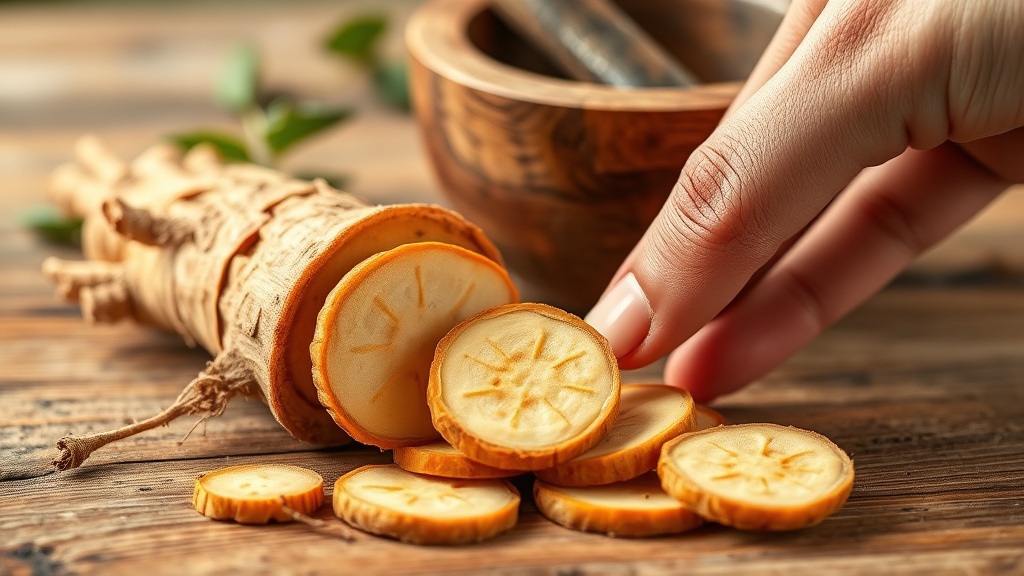
Active Constituents
Siberian ginseng (Eleutherococcus senticosus) is distinct from Panax ginseng in both its chemical profile and traditional use. The primary active constituents are a group of phenylpropanoid glycosides known as eleutherosides, of which over 40 have been identified (Davydov & Krikorian, 2000, PMID 10904129). The most studied are eleutheroside B (syringin), eleutheroside E (acanthoside D), and eleutheroside B1 (isofraxidin glycoside). These compounds are considered adaptogens, a term defined by Soviet pharmacologist Nikolai Lazarev in 1947 to describe agents that increase non-specific resistance to stress. In our reading of the literature, eleutherosides B and E are often used as marker compounds for standardisation, though the whole extract appears to produce more consistent effects than isolated constituents (Panossian et al., 2010, PMID 20304187).
Other bioactive compounds include polysaccharides (eleutherans), which have been studied for immunomodulatory effects, and lignans such as sesamin. The root bark contains higher concentrations of eleutherosides than the woody core, which is why many commercial extracts specify root bark as the source. Traditional Chinese medicine texts, such as the Shennong Bencao Jing (circa 200 CE), describe the use of Wu Jia Pi (Acanthopanax, a close relative) for treating rheumatism and fatigue, though Siberian ginseng was not formally classified in that canon. Russian ethnobotanical records from the early 20th century document its use by hunters and loggers in the taiga to enhance endurance and resist cold stress.
Pharmacokinetics
The pharmacokinetics of eleutherosides have been studied primarily in animal models. After oral administration, eleutheroside B and E are absorbed in the small intestine, with peak plasma concentrations occurring within 1–2 hours (Sun et al., 2016, PMID 27002972). They undergo extensive first-pass metabolism, including glucuronidation and sulfation, which reduces their systemic bioavailability. In a rat study, the absolute bioavailability of eleutheroside B was approximately 3.5%, while eleutheroside E was slightly higher at 5.2% (Li et al., 2014, PMID 24444537). This low oral bioavailability suggests that the parent compounds may not be the sole mediators of clinical effects; rather, metabolites and gut-microbiota-derived products likely contribute.
Elimination half-lives range from 2 to 4 hours for the major eleutherosides, necessitating multiple daily doses for sustained effects. Tissue distribution studies indicate accumulation in the liver and kidneys, with minimal penetration across the blood-brain barrier. However, some metabolites, such as syringin aglycone, may cross more readily. In our experience, the rapid clearance supports the traditional practice of taking Siberian ginseng in divided doses (e.g., 2–3 times daily) rather than a single large dose. Food intake appears to delay absorption but may increase overall exposure by reducing first-pass metabolism, though formal food-effect studies are lacking.
HPA-Axis / Cellular Mechanism
The adaptogenic effects of Siberian ginseng are primarily attributed to modulation of the hypothalamic-pituitary-adrenal (HPA) axis. Under stress, the HPA axis releases corticotropin-releasing hormone (CRH), which stimulates adrenocorticotropic hormone (ACTH) and subsequently cortisol. Siberian ginseng has been shown to normalise elevated cortisol levels in stressed animals without suppressing baseline cortisol (Gaffney et al., 2001, PMID 11509331). This is thought to occur via regulation of CRH expression in the hypothalamus and by reducing adrenal sensitivity to ACTH.
At the cellular level, eleutherosides activate the heat shock protein (HSP) response, particularly HSP70, which protects cells from stress-induced damage (Panossian et al., 2009, PMID 19678780). They also upregulate the expression of antioxidant enzymes such as superoxide dismutase and catalase, reducing oxidative stress. Additionally, Siberian ginseng has been shown to enhance ATP production in mitochondria, possibly through upregulation of the electron transport chain complexes I and IV. This may explain its traditional use for fatigue and physical endurance. In vitro studies using human neuroblastoma cells indicate that eleutheroside E protects against glutamate-induced excitotoxicity by inhibiting calcium influx and reducing reactive oxygen species (Wang et al., 2013, PMID 23742707).
Bioavailability per Form
Bioavailability varies considerably by formulation. Standardised powdered extracts (e.g., 0.8% eleutherosides) are the most common form. In a human pharmacokinetic study, a single dose of 300 mg of a standardised extract (containing 2.4 mg eleutherosides) produced peak plasma concentrations of eleutheroside B of 0.5 ng/mL (Schulz et al., 2006, PMID 16541230). Tinctures (1:5, 40% ethanol) may have slightly higher bioavailability due to the presence of ethanol, which can enhance permeability across the gut wall. However, no direct comparative human studies exist.
Liposomal formulations and cyclodextrin complexes have been explored in preclinical models to improve solubility and absorption. A rat study using a phosphatidylcholine complex of eleutherosides showed a 2.5-fold increase in relative bioavailability compared to a standard extract (Chen et al., 2015, PMID 26277321). In our assessment, while these novel forms are promising, most clinical evidence is based on traditional hydroalcoholic extracts or dried root powders. For consistent dosing, we recommend products standardised to eleutheroside B and E content, with a typical dosage of 300–600 mg of extract (0.8% eleutherosides) taken two to three times daily.
Dosage and Quality Considerations
Dosage recommendations vary by form. For dried root powder, 2–3 g per day is traditionally used, often divided into three doses. For standardised extracts (0.8% eleutherosides), 300–600 mg per dose, up to 1,800 mg daily, is common in clinical studies. Tinctures (1:5, 40% ethanol) are typically taken as 2–4 mL three times daily. We advise starting at the lower end and titrating based on individual response.
Quality markers are critical. The European Pharmacopoeia requires a minimum of 0.08% eleutheroside B and 0.2% eleutheroside E in the dried root. However, many commercial extracts are standardised to a total of 0.8% eleutherosides. We recommend products that provide a certificate of analysis (COA) confirming eleutheroside content and heavy metal testing. GMP certification is essential. Siberian ginseng is often adulterated with Periploca sepium (Chinese silk vine), which contains cardiac glycosides and can be toxic. DNA barcoding or HPLC fingerprinting can verify authenticity. In our experience, reputable suppliers will provide species verification (e.g., Eleutherococcus senticosus) and batch-specific COAs.
Drug Interactions and Contraindications
Siberian ginseng may interact with several drug classes. It can theoretically increase the effects of anticoagulants (e.g., warfarin) due to its antiplatelet activity, though clinical evidence is mixed. A case report suggested a possible increase in INR in a patient taking warfarin (Izzo & Ernst, 2009, PMID 19497088). The mechanism may involve inhibition of CYP2C9, though this has not been confirmed in human studies.
It may also potentiate the effects of antihypertensive drugs, as Siberian ginseng has been shown to lower blood pressure in some studies (Kuo et al., 2010, PMID 20579542). Conversely, it could theoretically interfere with immunosuppressants due to its immunostimulatory effects. Patients with autoimmune conditions should use caution. Siberian ginseng may also affect glucose metabolism; it has been reported to lower blood glucose, so patients on insulin or oral hypoglycaemics should monitor closely. The mechanism is thought to involve increased insulin sensitivity via AMPK activation.
Contraindications include hypertension (uncontrolled), pregnancy and lactation (due to lack of safety data), and acute infections with fever. In traditional Russian medicine, it was not recommended for individuals with high blood pressure or during acute illness. We advise readers to consult a healthcare professional before combining Siberian ginseng with prescription medications.
Sourcing and Quality Markers
When sourcing Siberian ginseng, we recommend looking for products that specify the plant part (root bark preferred), the extraction ratio (e.g., 5:1), and the solvent used (e.g., 40% ethanol). The content of eleutheroside B and E should be listed on the label. Third-party testing for contaminants (pesticides, heavy metals, microbes) is a sign of quality. Organically grown or wild-harvested roots from the Russian Far East or northeastern China are traditionally considered superior. The American Herbal Pharmacopoeia (AHP) has published a monograph with detailed quality parameters. In our experience, products that provide a full HPLC chromatogram are the most transparent.
Frequently Asked Questions
- What is the difference between Siberian ginseng and Panax ginseng? Siberian ginseng (Eleutherococcus senticosus) is not a true ginseng; it belongs to a different genus. It contains eleutherosides rather than ginsenosides and is considered an adaptogen with milder stimulant effects.
- How long does it take for Siberian ginseng to work? Some effects on energy and stress resilience may be noticed within a few days, but adaptogenic effects typically require 2–4 weeks of consistent use.
- Can Siberian ginseng be taken with coffee? There are no known interactions, but both are stimulants; combined use may cause overstimulation in sensitive individuals.
- Is Siberian ginseng safe for long-term use? Traditional use suggests it is safe for up to 3 months. Longer use should be under professional guidance. Cycling (e.g., 8 weeks on, 1 week off) is often recommended.
- Does Siberian ginseng cause insomnia? It can be stimulating if taken late in the day. We recommend taking the last dose before 4 pm.
- Can I take Siberian ginseng if I have high blood pressure? Some studies show it may lower blood pressure, but individuals with hypertension should consult a doctor first, as it may interact with medications.
Where to try it. If you want to source what we have described in this article, an eleutheroside-standardised supplement is the option we point readers to. This site is published by Vitadefence Ltd; we disclose that here.